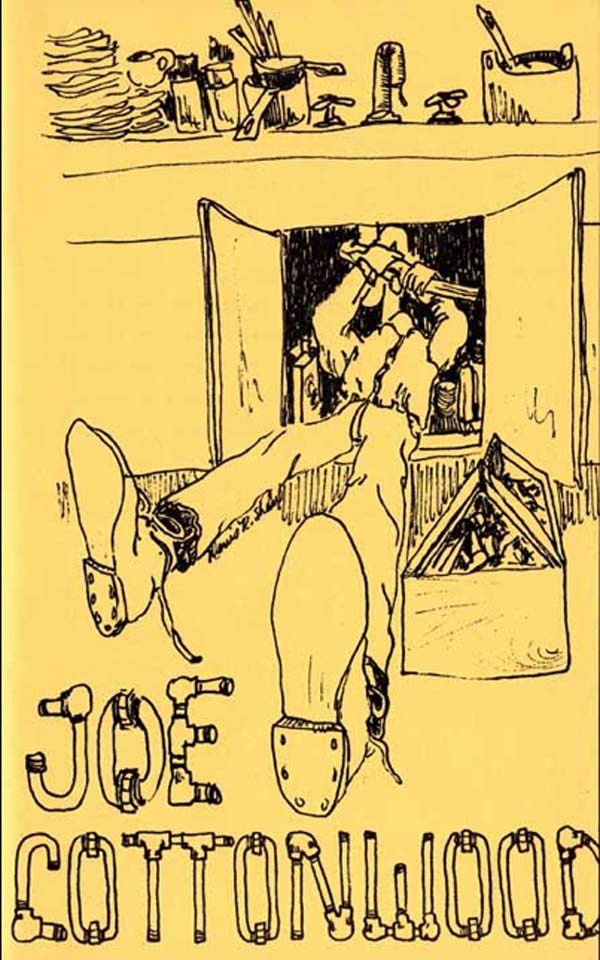
Sorry for the silence. I've been writing like mad to create a book based on the themes of this blog. The tentative title: 99 Jobs: Good Hard Work.
The
final product will be an e-book (containing approximately 99 of the
blog stories, rewritten). If enough people buy the e-book, a print
publisher might pick it up as well. That's how business is done these
days among non-blockbuster writers such as myself.
I
want to thank everybody who has been reading the 365 Jobs stories and
providing feedback. With your help, I have a pretty good idea of what
people would like to read and what sort of stories I want to tell.
I
may try a Kickstarter campaign so I can pay for some professional help
in launching this book — and so I can run off some print copies as
well. Stay tuned for news on that.
What do you think
of the title? And how about this model for a book cover? (That's my
dear old leather tool belt, which I've written about here and here.)
Showing posts with label 365 Jobs. Show all posts
Sunday, June 30, 2013
Saturday, May 11, 2013
365 Jobs: My House Was Always Wet
Sunday, November 8, 1981
My House Was Always Wet
Faucets dripped.
Gutters overflowed.
The old roof, Vermont slate, leaked.
The two toilets, mysterious machines,
ran, whistled, gurgled, clunked in the night.
Drains backed up with smelly gray suds.
Cellar walls weeped.
Pipes shrieked.
If I took a shower upstairs,
downstairs a water stain
grew on Granma's ceiling.
Once after an extra long shower
("What were you doing in that shower, boy?")
Granma's ceiling
collapsed.
My father was no plumber.
Once he broke a china sink.
Ripped a hole in a bedroom wall,
then didn't come home at all, at all.
Doors grew mildew, ceilings grew mold.
Floor joists quietly rotted.
My own sprouting body grew fungus
in places I didn't dare mention.
Sister moved across the sea;
Brother, to the coast;
Granma, to the hospital
and gave up the ghost.
I, too, traveled far
though moisture haunted
my every move:
sweating palms,
saliva of lips,
teardrops and their salty tracks,
juice of genitals, flood of birth,
milk of breast… The house
was leaking love, my friend,
and no pipe ever
brought it back.
Now Grown
Now grown,
in a dripping house of my own,
being plumber and father combined,
why don’t we have love
most all of the time?
My House Was Always Wet
Faucets dripped.
Gutters overflowed.
The old roof, Vermont slate, leaked.
The two toilets, mysterious machines,
ran, whistled, gurgled, clunked in the night.
Drains backed up with smelly gray suds.
Cellar walls weeped.
Pipes shrieked.
If I took a shower upstairs,
downstairs a water stain
grew on Granma's ceiling.
Once after an extra long shower
("What were you doing in that shower, boy?")
Granma's ceiling
collapsed.
My father was no plumber.
Once he broke a china sink.
Ripped a hole in a bedroom wall,
then didn't come home at all, at all.
Doors grew mildew, ceilings grew mold.
Floor joists quietly rotted.
My own sprouting body grew fungus
in places I didn't dare mention.
Sister moved across the sea;
Brother, to the coast;
Granma, to the hospital
and gave up the ghost.
I, too, traveled far
though moisture haunted
my every move:
sweating palms,
saliva of lips,
teardrops and their salty tracks,
juice of genitals, flood of birth,
milk of breast… The house
was leaking love, my friend,
and no pipe ever
brought it back.
Now Grown
Now grown,
in a dripping house of my own,
being plumber and father combined,
why don’t we have love
most all of the time?
Friday, May 10, 2013
365 Jobs: An Embarrassing Moment
October 4, 1984
An Embarrassing Moment
Mild stomach flu but a full day’s labor:
pipes soldered, drywall patched. Done.
Motoring home in my pickup
among the mansions of Atherton
after dark, without warning I
suddenly need to — immediately —
must absolutely at this moment
take an extreme
crap.
Stop the truck. Out.
In front of a vast estate I squat behind a
RONALD REAGAN FOR PRESIDENT
lawn sign and let fly
among some pumpkins.
As I rebuckle beside
the steaming puddle,
lights come on flooding
the garden while an alarm
starts blatting and a dark dog is
running. A man is shouting
through the glare but I’m gone
and accelerating while the dog chases
my left rear wheel so I never hear
the words but maybe the man is thanking me
for the fertilizer or exhorting me to vote for Ron.
I regret missing his
statement having already
made mine.
An Embarrassing Moment
Mild stomach flu but a full day’s labor:
pipes soldered, drywall patched. Done.
Motoring home in my pickup
among the mansions of Atherton
after dark, without warning I
suddenly need to — immediately —
must absolutely at this moment
take an extreme
crap.
Stop the truck. Out.
In front of a vast estate I squat behind a
RONALD REAGAN FOR PRESIDENT
lawn sign and let fly
among some pumpkins.
As I rebuckle beside
the steaming puddle,
lights come on flooding
the garden while an alarm
starts blatting and a dark dog is
running. A man is shouting
through the glare but I’m gone
and accelerating while the dog chases
my left rear wheel so I never hear
the words but maybe the man is thanking me
for the fertilizer or exhorting me to vote for Ron.
I regret missing his
statement having already
made mine.
Thursday, April 25, 2013
365 Jobs: Playing With Dolls
August 1986
Playing With Dolls
Lisa is a realtor. She's dark, intense. When I meet Lisa at the house, the new owners have changed the locks. Wearing a tight skirt, Lisa wiggles through the dog door and lets me in. "It's a job skill," she says, sucking deeply on a Marlboro, filling her pretty little chest with carcinogens.
I don't usually think of women as dolls, but Lisa is petite. With makeup her flesh is flawless, like plastic. There's a distance in her eyes, an untouchable quality about her, off-limits. Grown men shouldn't play with dolls.
Lisa's clients — two women named Judy and Janice buying their first home — want me to convert a wine cellar to a walk-in closet before they take possession. In addition, Judy and Janice want me to move a wall to accommodate a humongous bed. The floorspace will come at the expense of the other bedroom, which I will convert to another walk-in closet. Judy and Janice must have killer wardrobes. And an active, um, bed-life.
I've never met this couple, but I picture them in my mind as very young. Only the most active people with the most youthful knees would buy a house that should never have been built, a house on a steep hillside where you enter at street level and then descend two long flights of stairs to the living space. Nice view, though.
Some stoned painters arrive and start to spread drop cloths. I hear them talking about Lisa after she leaves. They, too, have noted her dolly quality. One says, "You think she's anatomically correct?"
The other painter chuckles. "She's cute," he says, "though she acts like she wouldn’t ever even kiss a guy. But I have to believe she’s lost, uh, you know, lost control of herself some time."
"She'd have to be on top," the first painter says, "or she'd suffocate."
"I'd never fuck a client," the second says. "It's unethical. At least, not until after she pays the bill."
Don the window washer arrives in the afternoon. I know Don from a previous job. He has a fresh scar on his forehead, a criminal record in his past, and when Lisa is gone he speculates in graphic and colorful detail about Lisa's body parts with particular attention to the scent and substance of body hair. "Short women taste different — like sauerkraut," he says. "And they have thicker hair." He claims to be an expert.
Then Don starts explaining his new scar, which involves a drunken bar fight: "He cut me, but I cut him worse. I needed fifteen stitches. Fifteen. I don't know how many he needed."
Don isn't the sort of person you'd want to leave alone in your house. Actually, come to think of it, maybe none of us are. And as it turns out, none of us pick up the clues about Lisa. We all made up our own little stories.
I install an aluminum threshold and stupidly bring my unguarded face close to the scroll saw so I can see the lines. A metal chip flies into my eye. Fucking shit. It hurts. I get it out but cry all evening, not sad, just making tears.
Lisa brings three telephone installers who do the work of one man. The senior of the three supervises while talking about the house he's building in Emerald Hills: "I'm making the kitchen twenty-five feet by twenty-five feet because I'm Italian, and Italians always gather in the kitchen." Then one of the installers staples his own finger to a baseboard, and the other installer pulls with needle-nose pliers while the supervisor swears in Italian. After they leave, Don the window washer in an uncharacteristic act of kindness wipes up the blood.
The wine cellar is of course at the bottom of the structure, down three flights of stairs. I calculate I've climbed those 60 steps at least 100 times, which is like climbing a 3000 foot mountain, and I've carried 500 pounds of drywall and dripped enough perspiration — plus a few tears, still flowing — to fill a 5-gallon bucket. I'm sure of that because in 3 days I drank over 5 gallons of water. I feel victorious — and dehydrated.
Lisa tells me that Janice wants me to repair a leaking shower and that one of the closet rods fell down. Suddenly it's just Janice. I'm embarrassed about the closet rod and curious about Judy.
"Don't worry," Lisa says, "Janice is the one with the money. It's her house. You'll still get paid."
"I wasn't thinking about money. I was wondering —"
"About lesbian love affairs? None of your business, Buster."
But it's not that. Not exactly. I'm simply curious. There's been drama, unknown: fights, a broken heart. I want the story.
On my final day of work, the moving company — Schmoover Movers — brings in a gigantic bed for which I've moved the wall. The bed frame they move in sections; the mattress they fold like a burrito to fit through the double doors.
I send a bill to Lisa. A few days later I receive a check in the mail signed by Janice, whom I've never met, who will be sleeping alone on a half-acre mattress in a house prepared by men — yes, in this case they're all male — who have bled their blood and dripped their sweat and echoed their voices within the bare walls — each with his own little comedies and tragedies — whom she's never met. It seems sad. Or maybe it's just the tears in my eyes.
A month later, I get a call from Lisa: "Remember that wine cellar you converted?"
"Oh no. Did another closet rod fall down?"
"Not that. More work. Janice wants to be sure I hire the same people because you left the house feeling so clean and pure. I didn't disillusion her. I know how you guys talk. I know what you probably said about her."
"Actually, honestly, I don't think anybody said anything about Janice. What does she need now?"
"We want you to convert half of that closet back into a wine cellar."
"We?"
"Can you hear me blushing? I know it's sort of unethical to poach a client."
"Poaching? Is that what you call it?"
So now I know what happened to Judy.
"I'm a small person with a small wardrobe," Lisa says, "and I'm sort of a wine snob."
Playing With Dolls
Lisa is a realtor. She's dark, intense. When I meet Lisa at the house, the new owners have changed the locks. Wearing a tight skirt, Lisa wiggles through the dog door and lets me in. "It's a job skill," she says, sucking deeply on a Marlboro, filling her pretty little chest with carcinogens.
I don't usually think of women as dolls, but Lisa is petite. With makeup her flesh is flawless, like plastic. There's a distance in her eyes, an untouchable quality about her, off-limits. Grown men shouldn't play with dolls.
Lisa's clients — two women named Judy and Janice buying their first home — want me to convert a wine cellar to a walk-in closet before they take possession. In addition, Judy and Janice want me to move a wall to accommodate a humongous bed. The floorspace will come at the expense of the other bedroom, which I will convert to another walk-in closet. Judy and Janice must have killer wardrobes. And an active, um, bed-life.
I've never met this couple, but I picture them in my mind as very young. Only the most active people with the most youthful knees would buy a house that should never have been built, a house on a steep hillside where you enter at street level and then descend two long flights of stairs to the living space. Nice view, though.
Some stoned painters arrive and start to spread drop cloths. I hear them talking about Lisa after she leaves. They, too, have noted her dolly quality. One says, "You think she's anatomically correct?"
The other painter chuckles. "She's cute," he says, "though she acts like she wouldn’t ever even kiss a guy. But I have to believe she’s lost, uh, you know, lost control of herself some time."
"She'd have to be on top," the first painter says, "or she'd suffocate."
"I'd never fuck a client," the second says. "It's unethical. At least, not until after she pays the bill."
Don the window washer arrives in the afternoon. I know Don from a previous job. He has a fresh scar on his forehead, a criminal record in his past, and when Lisa is gone he speculates in graphic and colorful detail about Lisa's body parts with particular attention to the scent and substance of body hair. "Short women taste different — like sauerkraut," he says. "And they have thicker hair." He claims to be an expert.
Then Don starts explaining his new scar, which involves a drunken bar fight: "He cut me, but I cut him worse. I needed fifteen stitches. Fifteen. I don't know how many he needed."
Don isn't the sort of person you'd want to leave alone in your house. Actually, come to think of it, maybe none of us are. And as it turns out, none of us pick up the clues about Lisa. We all made up our own little stories.
I install an aluminum threshold and stupidly bring my unguarded face close to the scroll saw so I can see the lines. A metal chip flies into my eye. Fucking shit. It hurts. I get it out but cry all evening, not sad, just making tears.
Lisa brings three telephone installers who do the work of one man. The senior of the three supervises while talking about the house he's building in Emerald Hills: "I'm making the kitchen twenty-five feet by twenty-five feet because I'm Italian, and Italians always gather in the kitchen." Then one of the installers staples his own finger to a baseboard, and the other installer pulls with needle-nose pliers while the supervisor swears in Italian. After they leave, Don the window washer in an uncharacteristic act of kindness wipes up the blood.
The wine cellar is of course at the bottom of the structure, down three flights of stairs. I calculate I've climbed those 60 steps at least 100 times, which is like climbing a 3000 foot mountain, and I've carried 500 pounds of drywall and dripped enough perspiration — plus a few tears, still flowing — to fill a 5-gallon bucket. I'm sure of that because in 3 days I drank over 5 gallons of water. I feel victorious — and dehydrated.
Lisa tells me that Janice wants me to repair a leaking shower and that one of the closet rods fell down. Suddenly it's just Janice. I'm embarrassed about the closet rod and curious about Judy.
"Don't worry," Lisa says, "Janice is the one with the money. It's her house. You'll still get paid."
"I wasn't thinking about money. I was wondering —"
"About lesbian love affairs? None of your business, Buster."
But it's not that. Not exactly. I'm simply curious. There's been drama, unknown: fights, a broken heart. I want the story.
On my final day of work, the moving company — Schmoover Movers — brings in a gigantic bed for which I've moved the wall. The bed frame they move in sections; the mattress they fold like a burrito to fit through the double doors.
I send a bill to Lisa. A few days later I receive a check in the mail signed by Janice, whom I've never met, who will be sleeping alone on a half-acre mattress in a house prepared by men — yes, in this case they're all male — who have bled their blood and dripped their sweat and echoed their voices within the bare walls — each with his own little comedies and tragedies — whom she's never met. It seems sad. Or maybe it's just the tears in my eyes.
A month later, I get a call from Lisa: "Remember that wine cellar you converted?"
"Oh no. Did another closet rod fall down?"
"Not that. More work. Janice wants to be sure I hire the same people because you left the house feeling so clean and pure. I didn't disillusion her. I know how you guys talk. I know what you probably said about her."
"Actually, honestly, I don't think anybody said anything about Janice. What does she need now?"
"We want you to convert half of that closet back into a wine cellar."
"We?"
"Can you hear me blushing? I know it's sort of unethical to poach a client."
"Poaching? Is that what you call it?"
So now I know what happened to Judy.
"I'm a small person with a small wardrobe," Lisa says, "and I'm sort of a wine snob."
Sunday, April 21, 2013
365 Jobs: First Birthday
Monday, October 10, 1977
First Birthday
Today is October 10, 1977. Exactly one year ago at 9 a.m., my son was born. Today at 9 a.m. I meet a bosomy woman named Nina at a fixer-upper in Palo Alto. She wants me to relocate a sink and replace a toilet. First thing I do, exploring, is wiggle a hot water pipe, which breaks off in my hand, flooding the kitchen and bathroom before I find the shutoff. Luke, the old carpenter working there, says, "An inauspicious beginning." He has a Canadian accent: in-ow-spicious.
Luke is a chatty old nut who looks like a professor wearing a tool belt. As it turns out, I'm not far off.
Luke tells dirty jokes and has a poor boys' view of authority. He got married in Tahoe just last Saturday — to Nina. He grew up poor in Saskatoon. He worked in the Royal Canadian Mounted motor pool but decided he could better himself, so he took an RCMP test whose results indicated that he should stay in the motor pool. Instead, he went to college, and nine years later he had a Ph.D. in genetics. "Tests are crap," he says.
Luke worked under Dr. Norman Shumway, the pioneering heart transplant surgeon at Stanford. "I'm a handy scientist," Luke says, "which is a useful and rare commodity." He takes off from time to time to fix up houses, which is how he met the top-heavy Nina. "It's a match made in heaven," Luke says. "My brains, her obvious and abundant fertility — we'll conquer the world." Luke does not lack in self-esteem. Nor in breast-worship.
With the profits they'll make from this fixer-upper, they'll move to British Columbia where Luke will work in the Immunology Department at UBC — in the Lung Unit, he says, coughing (he chain-smokes) — while Nina starts having his babies. "I don't want my DNA to disappear," Luke says. "I want to replicate."
I wish his genetic material the best of luck. I go home to my first son's first birthday. At one year old, he walks, climbs, barks, and babbles. He likes scrambled eggs, PB&J, beer (it was an accident, one-time), and Cheerios. He likes dogs, sticks, tennis balls, his red fire engine, telephones (he eats them), and wastebaskets (he ransacks them). It's a lot like having a puppy in the house. He’s healthy and strong and cute as a button with big brown eyes and soft brown hair. He likes to sit in his easy chair and kick his feet up just like the old man. Replication.
Miranda, our midwife, is supposed to join us for dinner. At last she shows up after we call to remind her. My son by this time is asleep. "Sorry," Miranda says, and she explains why she's distracted. It's complicated: She has a boyfriend named Theo. Theo is married to a woman named Sunflower. Theo and Sunflower have a child with Down syndrome.
Sunflower flipped out after the birth. She went in and out of hospitals while Theo cared for the baby. Sunflower started seeing a shrink who gave her "the acid treatment" (LSD), which changed her from mildly freaked to totally psychotic — hiding in corners, babbling. So this same shrink sent Sunflower back east for months of electroshock treatments. You have to wonder if he slept with her, too, since he did everything else wrong. Then Sunflower disappeared. For months.
At last Sunflower showed up at her parents' house in Florida. Sunflower's parents have a good deal of money. With a court order they removed their granddaughter from Theo's care in California and took her to Florida. Theo without funds was powerless to fight them.
One thing revealed in Sunflower’s flipping out was that her father had sexually molested her as a child. Now this man was caring for Ami, the sweet-natured girl with Down syndrome. Theo tried to visit Ami in Florida. The parents wouldn’t let him see the child.
A year passed. Miranda met Theo, and they fell in love. Sunflower became a fundamentalist Christian and converted her parents. Theo and Miranda went to Florida together and tried to get the fundamentalist minister to arrange a meeting with the grandparents. They got nowhere. So they spied on Sunflower’s folks and learned their routines. By this time Sunflower had split for months, no one knew where.
They decided to kidnap Ami. The first plan was for a Sunday when the folks went to church. It didn’t work — they never had an opening. Kidnapping isn't so easy. The next plan was for a school day. Theo walked to the elementary school. Miranda waited two blocks away with a rental car at a phone booth. She waited. And waited. Then she panicked. She went to the school and said she was from Missouri and wanted to observe how they did it here. She walked around blabbering nonsense but couldn’t find Theo or Ami. Finally Miranda saw them walking along the sidewalk outside. Miranda made excuses and ran. She followed Theo until they got to the car where they changed clothes and drove to Palm Beach and caught a plane, Miranda keeping Ami while Theo flew separately on the theory they’d look for Theo. They changed planes in Saint Louis, calling the folks to tell them they've got Ami. The grandmother says, "It’s God’s will." The grandmother then apologized — she never wanted Ami but Sunflower talked her into it.
As far as Miranda can tell, there's no evidence that the grandfather molested Ami, but now the girl cries whenever she has to go to bathroom, which she never did before.
"I'm sorry," Miranda says, "you didn't need to hear all this."
"It's okay," I say. "I think you needed to say all this. I'm kind of amazed you showed up at all. When did all this happen?"
"We just got back yesterday." She looks in on my son, who is curled up in the crib with his froggy blanket. There is adoration in Miranda's eyes. She helped bring my son into the world. It's her vocation. Her passion. "We just keep creating these amazing children," she says. "What else can we do?"
First Birthday
Today is October 10, 1977. Exactly one year ago at 9 a.m., my son was born. Today at 9 a.m. I meet a bosomy woman named Nina at a fixer-upper in Palo Alto. She wants me to relocate a sink and replace a toilet. First thing I do, exploring, is wiggle a hot water pipe, which breaks off in my hand, flooding the kitchen and bathroom before I find the shutoff. Luke, the old carpenter working there, says, "An inauspicious beginning." He has a Canadian accent: in-ow-spicious.
Luke is a chatty old nut who looks like a professor wearing a tool belt. As it turns out, I'm not far off.
Luke tells dirty jokes and has a poor boys' view of authority. He got married in Tahoe just last Saturday — to Nina. He grew up poor in Saskatoon. He worked in the Royal Canadian Mounted motor pool but decided he could better himself, so he took an RCMP test whose results indicated that he should stay in the motor pool. Instead, he went to college, and nine years later he had a Ph.D. in genetics. "Tests are crap," he says.
Luke worked under Dr. Norman Shumway, the pioneering heart transplant surgeon at Stanford. "I'm a handy scientist," Luke says, "which is a useful and rare commodity." He takes off from time to time to fix up houses, which is how he met the top-heavy Nina. "It's a match made in heaven," Luke says. "My brains, her obvious and abundant fertility — we'll conquer the world." Luke does not lack in self-esteem. Nor in breast-worship.
With the profits they'll make from this fixer-upper, they'll move to British Columbia where Luke will work in the Immunology Department at UBC — in the Lung Unit, he says, coughing (he chain-smokes) — while Nina starts having his babies. "I don't want my DNA to disappear," Luke says. "I want to replicate."
I wish his genetic material the best of luck. I go home to my first son's first birthday. At one year old, he walks, climbs, barks, and babbles. He likes scrambled eggs, PB&J, beer (it was an accident, one-time), and Cheerios. He likes dogs, sticks, tennis balls, his red fire engine, telephones (he eats them), and wastebaskets (he ransacks them). It's a lot like having a puppy in the house. He’s healthy and strong and cute as a button with big brown eyes and soft brown hair. He likes to sit in his easy chair and kick his feet up just like the old man. Replication.
Miranda, our midwife, is supposed to join us for dinner. At last she shows up after we call to remind her. My son by this time is asleep. "Sorry," Miranda says, and she explains why she's distracted. It's complicated: She has a boyfriend named Theo. Theo is married to a woman named Sunflower. Theo and Sunflower have a child with Down syndrome.
Sunflower flipped out after the birth. She went in and out of hospitals while Theo cared for the baby. Sunflower started seeing a shrink who gave her "the acid treatment" (LSD), which changed her from mildly freaked to totally psychotic — hiding in corners, babbling. So this same shrink sent Sunflower back east for months of electroshock treatments. You have to wonder if he slept with her, too, since he did everything else wrong. Then Sunflower disappeared. For months.
At last Sunflower showed up at her parents' house in Florida. Sunflower's parents have a good deal of money. With a court order they removed their granddaughter from Theo's care in California and took her to Florida. Theo without funds was powerless to fight them.
One thing revealed in Sunflower’s flipping out was that her father had sexually molested her as a child. Now this man was caring for Ami, the sweet-natured girl with Down syndrome. Theo tried to visit Ami in Florida. The parents wouldn’t let him see the child.
A year passed. Miranda met Theo, and they fell in love. Sunflower became a fundamentalist Christian and converted her parents. Theo and Miranda went to Florida together and tried to get the fundamentalist minister to arrange a meeting with the grandparents. They got nowhere. So they spied on Sunflower’s folks and learned their routines. By this time Sunflower had split for months, no one knew where.
They decided to kidnap Ami. The first plan was for a Sunday when the folks went to church. It didn’t work — they never had an opening. Kidnapping isn't so easy. The next plan was for a school day. Theo walked to the elementary school. Miranda waited two blocks away with a rental car at a phone booth. She waited. And waited. Then she panicked. She went to the school and said she was from Missouri and wanted to observe how they did it here. She walked around blabbering nonsense but couldn’t find Theo or Ami. Finally Miranda saw them walking along the sidewalk outside. Miranda made excuses and ran. She followed Theo until they got to the car where they changed clothes and drove to Palm Beach and caught a plane, Miranda keeping Ami while Theo flew separately on the theory they’d look for Theo. They changed planes in Saint Louis, calling the folks to tell them they've got Ami. The grandmother says, "It’s God’s will." The grandmother then apologized — she never wanted Ami but Sunflower talked her into it.
As far as Miranda can tell, there's no evidence that the grandfather molested Ami, but now the girl cries whenever she has to go to bathroom, which she never did before.
"I'm sorry," Miranda says, "you didn't need to hear all this."
"It's okay," I say. "I think you needed to say all this. I'm kind of amazed you showed up at all. When did all this happen?"
"We just got back yesterday." She looks in on my son, who is curled up in the crib with his froggy blanket. There is adoration in Miranda's eyes. She helped bring my son into the world. It's her vocation. Her passion. "We just keep creating these amazing children," she says. "What else can we do?"
Friday, April 19, 2013
365 Jobs: Back Yard, Seven Months
Friday, April, 2013
Back Yard, Seven Months
You clutch grass.
Dandelion seeds stick in the slick of your face.
A ladybug, so bright, crosses a leaf, so busy.
From apple blossoms, the buzz of bees.
Little fingers rake tiny green
leaves: baby’s tears, inaptly named.
A geranium enters, somehow, a nostril.
Drool mixes with crumbs of dirt.
A breeze blows your hair,
sun blushes your skin.
To all the world
you smile.
Note:
Sometimes a poem is a way of taking a snapshot. I snapped this one when I had the job of taking care of my newest grandson for a day.
He's one happy fellow.
And why does this poem appear in a blog about jobs? Because I work with my hands. These are my trades: plumber, carpenter, electrician, grandfather. My tools: wrench, hammer, pliers, blanket.
Back Yard, Seven Months
You clutch grass.
Dandelion seeds stick in the slick of your face.
A ladybug, so bright, crosses a leaf, so busy.
From apple blossoms, the buzz of bees.
Little fingers rake tiny green
leaves: baby’s tears, inaptly named.
A geranium enters, somehow, a nostril.
Drool mixes with crumbs of dirt.
A breeze blows your hair,
sun blushes your skin.
To all the world
you smile.
Note:
Sometimes a poem is a way of taking a snapshot. I snapped this one when I had the job of taking care of my newest grandson for a day.
He's one happy fellow.
And why does this poem appear in a blog about jobs? Because I work with my hands. These are my trades: plumber, carpenter, electrician, grandfather. My tools: wrench, hammer, pliers, blanket.
Wednesday, April 17, 2013
365 Jobs: A Milestone: 365 Posts!
A Milestone: 365 Posts!
My greetings and blessings to everybody. With the previous entry, my 365 Jobs blog now has 365 posts!
Tonight I'll celebrate under the redwoods with a soak in the hot tub and a couple of beers: Fat Tire, if you please. Should be a lovely night. My two dogs will join me — and maybe another companion.
When I started the 365 Jobs blog 836 days ago, it was intended as a one-year project. I had no idea it would be so much work. Or so much fun. Or that I'd make so many friends.
It's time to begin gathering, culling, creating a book that consolidates the best of what I've written there. I'm going to start work on that.
Also, I've just created a Facebook page where I'll post updates on the progress of the book (as well as posting them here). Come on over and "like" me if you want to receive updates, or if you're just a likable person. The Facebook page is here.
Meanwhile, tomorrow I'll go on posting — maybe we should rename it: "More Than 365 Jobs." I'm not done yet.
My greetings and blessings to everybody. With the previous entry, my 365 Jobs blog now has 365 posts!
Tonight I'll celebrate under the redwoods with a soak in the hot tub and a couple of beers: Fat Tire, if you please. Should be a lovely night. My two dogs will join me — and maybe another companion.
When I started the 365 Jobs blog 836 days ago, it was intended as a one-year project. I had no idea it would be so much work. Or so much fun. Or that I'd make so many friends.
It's time to begin gathering, culling, creating a book that consolidates the best of what I've written there. I'm going to start work on that.
Also, I've just created a Facebook page where I'll post updates on the progress of the book (as well as posting them here). Come on over and "like" me if you want to receive updates, or if you're just a likable person. The Facebook page is here.
Meanwhile, tomorrow I'll go on posting — maybe we should rename it: "More Than 365 Jobs." I'm not done yet.
365 Jobs: Pretty Polly
July, 2003
Pretty Polly
Polly is a sweet lady who seems to prefer the companionship of birds. Deeply beautiful in that freckly earth-mother way, she always wears colorful beads. Dozens of cages contain hundreds of bright busy birds: budgies, cockatiels, a macaw. Some of them will perch on her finger, singing. She's tamed them. Others, though, will never accept her. "It's a survival instinct," she says.
The house smells like a chicken coop.
Other than avians, Polly lives alone. She has a number of deeply-held beliefs, such as that daylight savings time is a conspiracy against poor people. And she believes that all the problems with George W. Bush can be explained by a botched circumcision.
Polly is not unpleasant, but she can be strident.
For her fortieth birthday Polly bought a computer and a fancy surge protector which, when plugged into the outlet, flashes a red error light indicating a broken ground.
It's a three-prong outlet, but when I open it, there's no ground wire. Just some old two-wire ungrounded Romex. I explain to Polly that somebody replaced the original two-prong outlet with a three-prong, though they never added an actual ground wire.
"You mean, they made it look like a grounded outlet even though they knew it wasn't grounded?"
"Exactly."
Polly frowns. "Now that is an evil act."
She's right. Sort of. It's petty evil. It was also, probably, simply an act of convenience.
On Polly's terms, there's a lot of evil in construction. There's evil everywhere, constant menace. Polly is ever on guard. You get the sense that she'll never be your friend. Or anybody's friend.
Some birds will never perch on fingers.
Note: photo by Jerry Tillery (from Wikipedia).
Pretty Polly
Polly is a sweet lady who seems to prefer the companionship of birds. Deeply beautiful in that freckly earth-mother way, she always wears colorful beads. Dozens of cages contain hundreds of bright busy birds: budgies, cockatiels, a macaw. Some of them will perch on her finger, singing. She's tamed them. Others, though, will never accept her. "It's a survival instinct," she says.
The house smells like a chicken coop.
Other than avians, Polly lives alone. She has a number of deeply-held beliefs, such as that daylight savings time is a conspiracy against poor people. And she believes that all the problems with George W. Bush can be explained by a botched circumcision.
Polly is not unpleasant, but she can be strident.
For her fortieth birthday Polly bought a computer and a fancy surge protector which, when plugged into the outlet, flashes a red error light indicating a broken ground.
It's a three-prong outlet, but when I open it, there's no ground wire. Just some old two-wire ungrounded Romex. I explain to Polly that somebody replaced the original two-prong outlet with a three-prong, though they never added an actual ground wire.
"You mean, they made it look like a grounded outlet even though they knew it wasn't grounded?"
"Exactly."
Polly frowns. "Now that is an evil act."
She's right. Sort of. It's petty evil. It was also, probably, simply an act of convenience.
On Polly's terms, there's a lot of evil in construction. There's evil everywhere, constant menace. Polly is ever on guard. You get the sense that she'll never be your friend. Or anybody's friend.
Some birds will never perch on fingers.
Note: photo by Jerry Tillery (from Wikipedia).
Tuesday, April 16, 2013
365 Jobs: The Class System
Wednesday, April 16, 1986The Class System
Mrs. E speaks with a British accent and carries herself with a royal air. Her lavishly landscaped yard has a swimming pool fed by a waterfall that splashes from stacked rocks and ferns. She has a view of the entire Silicon Valley.
I’m repairing a leak under her sink. Her husband had worked on it. Why oh why is this billionaire doing his own plumbing?
Mrs. E asks, "Did my husband totally botch it?"
"Um, it's just, I think it would be better to replace the entire drain assembly."
"You're very tactful." She laughs. "Where do you live?"
“La Honda," I say, which is like saying I live on the poor side of the mountain.
“I like La Honda," she says kindly. "It has such pretty views.”
“You’re not doing too bad, either,” I say. It sounds wrong and immediately there's a chill, like I’m envying her obvious financial success. "Your views," I say too late. "You have pretty views, too."
"Yes," says Mrs. E. And that's the end of chatting.
Her husband can't do plumbing, and I can't make small talk with a billionairess. We both have limits to our expertise. But I like it that he tries. I'll keep trying, too.
The waterfall, I decide, is too tidy. Too obviously placed there. Lacking nature’s artlessness. But then, I'm no expert.
Sunday, April 14, 2013
365 Jobs: The Moment After
Monday, November 21, 1994
The Moment After
Numb from the crawl space,
the weight of wrenches, the suck of mud,
the cruel finger-scrape of crusty gas pipe,
I open the cock, dimly aware of
a hoo-oo-ooting sound as wearily, stupidly
to relight the pilot I strike a match and
WHOOSH
a roaring comet of fire shoots across the garage
knocking me back like a high inside fastball.
Fast as flame the body moves
before the mind reacts:
I shut the cock.
The moment after
in stillness
my right arm is smoking.
The moment after
from my sizzled beard
the scent of singed hair.
The moment after
from my lip
the taste of ash.
The moment after
like a wild river
blood throbs through my heart.
Lungs expand with the rush of air.
Before pain can muster,
in the moment after
I have senses, spirit;
the soul burns,
my love, blessed
to the quick
with life.
The Moment After
Numb from the crawl space,
the weight of wrenches, the suck of mud,
the cruel finger-scrape of crusty gas pipe,
I open the cock, dimly aware of
a hoo-oo-ooting sound as wearily, stupidly
to relight the pilot I strike a match and
WHOOSH
a roaring comet of fire shoots across the garage
knocking me back like a high inside fastball.
Fast as flame the body moves
before the mind reacts:
I shut the cock.
The moment after
in stillness
my right arm is smoking.
The moment after
from my sizzled beard
the scent of singed hair.
The moment after
from my lip
the taste of ash.
The moment after
like a wild river
blood throbs through my heart.
Lungs expand with the rush of air.
Before pain can muster,
in the moment after
I have senses, spirit;
the soul burns,
my love, blessed
to the quick
with life.
Saturday, April 13, 2013
365 Jobs: Happiness, Last Chance
December, 1986
Happiness, Last Chance
After the divorce, I helped Cory move a 900-pound piano from the big old house to a funky little cottage that he'd rented nearby. There I met a shy, skinny woman. "This is my lover, Melissa," Cory said by way of introduction.
Cory was in his sixties. An engineer who'd survived cancer. Retired.
Melissa, lover, looked a little younger, fifty-something.
When we'd wheeled the piano into place, Melissa said, "That's it?"
Other than the piano, Cory had brought one suitcase. "That's it," he said. He'd given everything to his ex-wife: house, furniture, all earthly possessions. He would start anew.
Melissa, apparently, was starting over as well. In the living room there was weight-lifting equipment and nothing more. In the bedroom I could see a mattress on the floor. The walls were all bare.
Cory limped into the kitchen. He'd injured his leg in a bicycle accident as a child. Opening cabinet doors, finding nothing but nutritional drinks, he asked, "Don't you have a single pot?"
"You know I don't eat," Melissa said.
They kissed. Taped to the refrigerator was their only decoration, a calendar featuring photos of muscular body-building women.
They had equipped the house with their passions, nothing more.
For a couple years thereafter until Cory's cancer came back, evenings when I was walking my dog by the cottage, I could hear the piano and see the thin shadow of Melissa on the curtains, lifting weights, not eating. He loved that boogie-woogie.
Happiness, Last Chance
After the divorce, I helped Cory move a 900-pound piano from the big old house to a funky little cottage that he'd rented nearby. There I met a shy, skinny woman. "This is my lover, Melissa," Cory said by way of introduction.
Cory was in his sixties. An engineer who'd survived cancer. Retired.
Melissa, lover, looked a little younger, fifty-something.
When we'd wheeled the piano into place, Melissa said, "That's it?"
Other than the piano, Cory had brought one suitcase. "That's it," he said. He'd given everything to his ex-wife: house, furniture, all earthly possessions. He would start anew.
Melissa, apparently, was starting over as well. In the living room there was weight-lifting equipment and nothing more. In the bedroom I could see a mattress on the floor. The walls were all bare.
Cory limped into the kitchen. He'd injured his leg in a bicycle accident as a child. Opening cabinet doors, finding nothing but nutritional drinks, he asked, "Don't you have a single pot?"
"You know I don't eat," Melissa said.
They kissed. Taped to the refrigerator was their only decoration, a calendar featuring photos of muscular body-building women.
They had equipped the house with their passions, nothing more.
For a couple years thereafter until Cory's cancer came back, evenings when I was walking my dog by the cottage, I could hear the piano and see the thin shadow of Melissa on the curtains, lifting weights, not eating. He loved that boogie-woogie.
Thursday, April 11, 2013
365 Jobs: Vigilante, Kelly Moore Paint, San Carlos, California
Friday, April 11, 1986
Vigilante, Kelly Moore Paint, San Carlos, California
As I turn to enter the parking lot, a man is standing in the middle of the lane, a blockade.
I stop the truck.
He says, “You son of a bitch. I could sue you.”
Leaning my head out the window, I say, "Huh?"
A couple of painters are walking by. One says, “Come on, Frank. Let him in.”
Frank doesn’t budge. “It’s an exit,” Frank says. “He’s trying to enter an exit. See the arrow?”
“So what are you, a cop?” says the painter.
Meanwhile, I'm backing up.
Frank is muttering to himself.
He's sick. Anybody can see.
I salute. With respect. Honest, no sarcasm. With or without pay, every man needs a job. Such as: Parking Lot Vigilante.
Every man needs a purpose.
Vigilante, Kelly Moore Paint, San Carlos, California
As I turn to enter the parking lot, a man is standing in the middle of the lane, a blockade.
I stop the truck.
He says, “You son of a bitch. I could sue you.”
Leaning my head out the window, I say, "Huh?"
A couple of painters are walking by. One says, “Come on, Frank. Let him in.”
Frank doesn’t budge. “It’s an exit,” Frank says. “He’s trying to enter an exit. See the arrow?”
“So what are you, a cop?” says the painter.
Meanwhile, I'm backing up.
Frank is muttering to himself.
He's sick. Anybody can see.
I salute. With respect. Honest, no sarcasm. With or without pay, every man needs a job. Such as: Parking Lot Vigilante.
Every man needs a purpose.
Wednesday, April 10, 2013
365 Jobs: I Got Lost
Thursday, April 10, 1980
I Got Lost
In the laundry soap aisle at Payless my daughter, age two, gets separated from me and my shopping cart. I hear screams: "DADDY! WHERE ARE YOU?" I rush to pick her up and hold her in my arms.
She seems baffled by what happened. We were separated for about fifteen seconds.
"You got lost," I say. "You couldn't find me."
In her face she goes from bafflement to surrounding the idea: "I got lost." She's a quick learner.
She's growing so fast. Already I sense: In a blink, she'll be a teen. Another blink, she'll be gone. I tell her so, at dinner, and she tells me she doesn't want to grow up. She wants to grow down and be a hummingbird.
After dinner I go to a nearby house and hook up a stove. Low margin for me, but I promised the landlord. Some new tenants are moving in. First thing the two men do is carry in a television and attach it to cable. While I finish the job, they sit on the bare floor, drink beer, smoke ciggies, have a farting contest, and make jeering comments about some show they're watching called That's Incredible!.
I want to scream.
For a few bucks, I've missed an evening with my daughter and spent it with a couple of louts.
I got lost. I couldn't find her.
I Got Lost
In the laundry soap aisle at Payless my daughter, age two, gets separated from me and my shopping cart. I hear screams: "DADDY! WHERE ARE YOU?" I rush to pick her up and hold her in my arms.
She seems baffled by what happened. We were separated for about fifteen seconds.
"You got lost," I say. "You couldn't find me."
In her face she goes from bafflement to surrounding the idea: "I got lost." She's a quick learner.
She's growing so fast. Already I sense: In a blink, she'll be a teen. Another blink, she'll be gone. I tell her so, at dinner, and she tells me she doesn't want to grow up. She wants to grow down and be a hummingbird.
After dinner I go to a nearby house and hook up a stove. Low margin for me, but I promised the landlord. Some new tenants are moving in. First thing the two men do is carry in a television and attach it to cable. While I finish the job, they sit on the bare floor, drink beer, smoke ciggies, have a farting contest, and make jeering comments about some show they're watching called That's Incredible!.
I want to scream.
For a few bucks, I've missed an evening with my daughter and spent it with a couple of louts.
I got lost. I couldn't find her.
Tuesday, April 9, 2013
365 Jobs: Betsy's Door
Tuesday, October 24, 1989
Betsy's Door
Betsy is a grandmotherly sort. Gray hair, sweet face. You can tell immediately that money is tight. She lives alone in a one-room apartment over a garage.
Somebody kicked in her front entry. She's hired me to replace it with a crummy used door that she found leaning against a dumpster. I'll have to swap out the hinges and locks, then adjust the weatherstripping before she leaves for her job at three o'clock.
"Shouldn't the landlord pay for this?" I ask.
"No," Betsy says.
She watches me work. Occasionally she glances at something called The Daily Word, which is a Bible quote with a little sermon. She moves her lips as she's reading. Otherwise, she's silent. A simple, lonely woman, I'm thinking. To make conversation, I ask an easy question: "Where do you work?"
"Oh, you know," she says as if I might. Then it comes in a gush: "I used to run the Bar Association but it got too crazy so now I work at Stanford because they have good benefits and I do some extra bookkeeping on the side. I thought I'd be retired by now. I was planning to travel around in the motor home but now I can't afford to and I need to sell it. You interested?"
"No. Sorry." There's a boxy Fleetwood, dented and dirty, parked in the driveway.
We're quiet for a while. She watches me work and glances at The Daily Word.
I don't know why, but for some reason I remark: "I see a lot of motor homes with a bumper sticker that says WE ARE SPENDING OUR CHILDREN'S INHERITANCE."
"You don't like that?" she asks.
"It seems sad."
"Why not spend it? My son's an addict. I used to have a lot of fine antiques. Now look."
"Is that who kicked in the front door? Your son?"
"He's broken," she says. "Like an egg on a sidewalk."
A grandmotherly sort. Gray hair, sweet face. She has one room and The Daily Word.
Betsy's Door
Betsy is a grandmotherly sort. Gray hair, sweet face. You can tell immediately that money is tight. She lives alone in a one-room apartment over a garage.
Somebody kicked in her front entry. She's hired me to replace it with a crummy used door that she found leaning against a dumpster. I'll have to swap out the hinges and locks, then adjust the weatherstripping before she leaves for her job at three o'clock.
"Shouldn't the landlord pay for this?" I ask.
"No," Betsy says.
She watches me work. Occasionally she glances at something called The Daily Word, which is a Bible quote with a little sermon. She moves her lips as she's reading. Otherwise, she's silent. A simple, lonely woman, I'm thinking. To make conversation, I ask an easy question: "Where do you work?"
"Oh, you know," she says as if I might. Then it comes in a gush: "I used to run the Bar Association but it got too crazy so now I work at Stanford because they have good benefits and I do some extra bookkeeping on the side. I thought I'd be retired by now. I was planning to travel around in the motor home but now I can't afford to and I need to sell it. You interested?"
"No. Sorry." There's a boxy Fleetwood, dented and dirty, parked in the driveway.
We're quiet for a while. She watches me work and glances at The Daily Word.
I don't know why, but for some reason I remark: "I see a lot of motor homes with a bumper sticker that says WE ARE SPENDING OUR CHILDREN'S INHERITANCE."
"You don't like that?" she asks.
"It seems sad."
"Why not spend it? My son's an addict. I used to have a lot of fine antiques. Now look."
"Is that who kicked in the front door? Your son?"
"He's broken," she says. "Like an egg on a sidewalk."
A grandmotherly sort. Gray hair, sweet face. She has one room and The Daily Word.
Monday, April 8, 2013
365 Jobs: Fifty-Pound Chandelier
Friday, October 16, 1987
Fifty-Pound Chandelier
I'm installing a fifty-pound chandelier in Atherton. To place my ladder, I have to move a massive walnut table.
Mrs. W is watching me closely. "Don't hurt that table," she says. "It's the reason we bought the house."
"It came with the house?" I ask.
"No. I bought the dining room set for our old house, but it didn't fit, so we bought a new house."
Atherton is a different world.
Fifty-Pound Chandelier
I'm installing a fifty-pound chandelier in Atherton. To place my ladder, I have to move a massive walnut table.
Mrs. W is watching me closely. "Don't hurt that table," she says. "It's the reason we bought the house."
"It came with the house?" I ask.
"No. I bought the dining room set for our old house, but it didn't fit, so we bought a new house."
Atherton is a different world.
Wednesday, April 3, 2013
365 Jobs: Fuzzies
Adirondack Sketches: September, 2000
Fuzzies
Alone she cleans the cabin, packs her bag,
takes a last dip and shampoo in the lake.
A soapy cloud dissipates in the water.
A week of voluntary solitude is at end,
a week to wash her heart.
Email, voicemail await.
The wind is from the east — bad sign.
In the car a green caterpillar starts crawling up her leg.
At a stop sign, she tries to catch him, to set him free, outside,
but he panics and squirms out of her fingers to drop
to shadowy spots unseen. Him. He.
So she drives, reflecting upon, smiling at
her now-conscious assumption:
All caterpillars are male; that's why
they're so stupid and single-minded.
All butterflies are female; that's why
they're so nice.
The solitude healed. She can almost laugh.
Again he wiggles up her leg, the same leg, to her thigh.
Again she tries to grab him but he leaps —
how does a caterpillar leap?
— to the floor.
Either he will be crushed by her feet,
sucked up a Hertz vacuum cleaner,
or he will starve in this sterile Mazda.
She's rushing to catch a boat.
She cannot save him
if he won't be saved.
A hurricane is coming, dark sky.
The ride across Lake Champlain is wild.
Waves slam the shuddering ferry.
Water sprays the windshield.
Wind whips the puddles on the deck
while she searches the car from within, doors closed
to the weather, contorting like a back-seat lover
to peer under floormats. He can't be found.
She reaches Burlington Airport with time, barely,
to escape at the edge of the black storm.
A couple weeks ago, she came upon
a plump brown caterpillar
who was humping across the little lane
in front of her house.
She tried to guide him with the edge of
her flip-flop. He was stubborn.
A car approached.
Reflexively, obediently, she stepped aside.
He was popped
— splattered —
under the tire of a black Mercedes driven by a callow young man.
Now hunched in flight, middle seat, no leg room,
ignoring some bullshit movie
she clutches her belly. In her eyes appear
all things fragile, winged, unborn.
She could have stopped the car. Both cars:
pulled the Mazda to the side of the road
until she found that little beast, Adirondack refugee,
before the squalls trapped her — and he — inside
that metal cage. She could have stood
her ground against the black Mercedes
until the hairy worm could shimmy to the other side.
Air turbulence.
Hands clasped on the seat tray,
she prays: Little caterpillars,
please keep creeping.
Some day
you'll reach
whatever you're seeking.
Fuzzies
Alone she cleans the cabin, packs her bag,
takes a last dip and shampoo in the lake.
A soapy cloud dissipates in the water.
A week of voluntary solitude is at end,
a week to wash her heart.
Email, voicemail await.
The wind is from the east — bad sign.
In the car a green caterpillar starts crawling up her leg.
At a stop sign, she tries to catch him, to set him free, outside,
but he panics and squirms out of her fingers to drop
to shadowy spots unseen. Him. He.
So she drives, reflecting upon, smiling at
her now-conscious assumption:
All caterpillars are male; that's why
they're so stupid and single-minded.
All butterflies are female; that's why
they're so nice.
The solitude healed. She can almost laugh.
Again he wiggles up her leg, the same leg, to her thigh.
Again she tries to grab him but he leaps —
how does a caterpillar leap?
— to the floor.
Either he will be crushed by her feet,
sucked up a Hertz vacuum cleaner,
or he will starve in this sterile Mazda.
She's rushing to catch a boat.
She cannot save him
if he won't be saved.
A hurricane is coming, dark sky.
The ride across Lake Champlain is wild.
Waves slam the shuddering ferry.
Water sprays the windshield.
Wind whips the puddles on the deck
while she searches the car from within, doors closed
to the weather, contorting like a back-seat lover
to peer under floormats. He can't be found.
She reaches Burlington Airport with time, barely,
to escape at the edge of the black storm.
A couple weeks ago, she came upon
a plump brown caterpillar
who was humping across the little lane
in front of her house.
She tried to guide him with the edge of
her flip-flop. He was stubborn.
A car approached.
Reflexively, obediently, she stepped aside.
He was popped
— splattered —
under the tire of a black Mercedes driven by a callow young man.
Now hunched in flight, middle seat, no leg room,
ignoring some bullshit movie
she clutches her belly. In her eyes appear
all things fragile, winged, unborn.
She could have stopped the car. Both cars:
pulled the Mazda to the side of the road
until she found that little beast, Adirondack refugee,
before the squalls trapped her — and he — inside
that metal cage. She could have stood
her ground against the black Mercedes
until the hairy worm could shimmy to the other side.
Air turbulence.
Hands clasped on the seat tray,
she prays: Little caterpillars,
please keep creeping.
Some day
you'll reach
whatever you're seeking.
Saturday, March 30, 2013
365 Jobs: Brother William
Adirondack Sketches:
Brother William
Between a charcoal grill and a keg on ice
before a half dozen friends who tried to dress nice,
Brother William pronounces: "Husband and wife."
Couples by the hundred he's bonded for life
— or some brief stretch of it — in back yards, grassy
parks, open space under birches.
Never in churches.
These are joyous affairs with a simple touch.
"For people," he says, "who can't afford much."
He does it for free.
He says: For love.

Note: The man who I call "Brother William" is the man who introduced me to the Plattsburgh Hillbillies. He's a noble man (in the untitled sense), as you might expect since he's the son of Ken Laundry. He's also the only man I've ever met who has been turned into a bobblehead doll. If you would like to buy a genuine William D. Laundry bobblehead for $20, the proceeds go to an endowment at SUNY Plattsburgh. Call 800-964-1889.
Brother William
Between a charcoal grill and a keg on ice
before a half dozen friends who tried to dress nice,
Brother William pronounces: "Husband and wife."
Couples by the hundred he's bonded for life
— or some brief stretch of it — in back yards, grassy
parks, open space under birches.
Never in churches.
These are joyous affairs with a simple touch.
"For people," he says, "who can't afford much."
He does it for free.
He says: For love.

Note: The man who I call "Brother William" is the man who introduced me to the Plattsburgh Hillbillies. He's a noble man (in the untitled sense), as you might expect since he's the son of Ken Laundry. He's also the only man I've ever met who has been turned into a bobblehead doll. If you would like to buy a genuine William D. Laundry bobblehead for $20, the proceeds go to an endowment at SUNY Plattsburgh. Call 800-964-1889.
365 Jobs: At the Dock, Among Mountains
Adirondack Sketches
At the Dock
A warm breeze rises
over black water.
A meteorite —
so silent!
Your little finger
seeks my hand.
This, our cabaret.
Entranced we linger
among fireflies
sporting in
the nightlife.
Above hulking mountains
float stars,
the Milky Way
like city lights
of heaven.
Among Mountains
Returning as an old man
maybe now I understand:
The terrible weather of the Adirondacks
makes you treasure the good.
You find the right woman and stop.
You ride out storms.
You stir the glowing coals.
You learn to crave the taste
of wild blueberry
plucked fresh, staining lips,
sweetness so intense
you will climb peaks, gorge yourself,
filling pockets
for deep winter.
At the Dock
A warm breeze rises
over black water.
A meteorite —
so silent!
Your little finger
seeks my hand.
This, our cabaret.
Entranced we linger
among fireflies
sporting in
the nightlife.
Above hulking mountains
float stars,
the Milky Way
like city lights
of heaven.
Among Mountains
Returning as an old man
maybe now I understand:
The terrible weather of the Adirondacks
makes you treasure the good.
You find the right woman and stop.
You ride out storms.
You stir the glowing coals.
You learn to crave the taste
of wild blueberry
plucked fresh, staining lips,
sweetness so intense
you will climb peaks, gorge yourself,
filling pockets
for deep winter.
Thursday, March 28, 2013
365 Jobs: In the Burlington Airport
Adirondack Sketches: Thursday, July 12, 2001
In the Burlington Airport
Two men in T-shirts are sun-roughened,
muscular in that non-bodybuilder way.
They know physical work.
On the window glass with a smudgy finger
the older man sketches a map from memory.
They speak of willow trees, a trickling spring.
A rocky field. Twin graves on a hill.
The younger man says, "That land was like home to me.
Every time I set foot on it, I felt like I was being hugged."
Embarrassed, perhaps, they each look away
through the glass. On the runway, jets are rolling.
Newark. Chicago. Some goddamn city. Now boarding.
In the Burlington Airport
Two men in T-shirts are sun-roughened,
muscular in that non-bodybuilder way.
They know physical work.
On the window glass with a smudgy finger
the older man sketches a map from memory.
They speak of willow trees, a trickling spring.
A rocky field. Twin graves on a hill.
The younger man says, "That land was like home to me.
Every time I set foot on it, I felt like I was being hugged."
Embarrassed, perhaps, they each look away
through the glass. On the runway, jets are rolling.
Newark. Chicago. Some goddamn city. Now boarding.
Wednesday, March 27, 2013
365 Jobs: Catching a Cab in Burlington, Vermont
Adirondack Sketches
Catching a Cab in Burlington, Vermont
The sun has set, the dusk is deep.
You wipe your fingers of hamburger grease
while the counter girl cleans up, humming,
closing. Stepping out, you catch a taxi
for the five minute ride to the Ho Hum Motel.
The driver, Amanda, looks college age.
She says her father owns the cab.
Chatty, she says she's lived here
her whole life. It's a safe town:
"I mean, look at me, I'm driving a taxi at night."
A pleasant trip.
You overtip.
Morning, you head for the lake where
sailboats flutter like delicate moths.
Your cabbie, Albert, blares the horn: "This is what
I hate about this town. People
don't get out of the way. People walkin'!
Y'know what I'm sayin'?"
Albert's a whiner, a short guy.
"I can't wait to go back south in a couple
months when my service ends."
Oh, service. Meaning: Albert's on parole,
a work-release. What crime?
Probably no danger, but strange.
You count your change.
Catching a Cab in Burlington, Vermont
The sun has set, the dusk is deep.
You wipe your fingers of hamburger grease
while the counter girl cleans up, humming,
closing. Stepping out, you catch a taxi
for the five minute ride to the Ho Hum Motel.
The driver, Amanda, looks college age.
She says her father owns the cab.
Chatty, she says she's lived here
her whole life. It's a safe town:
"I mean, look at me, I'm driving a taxi at night."
A pleasant trip.
You overtip.
Morning, you head for the lake where
sailboats flutter like delicate moths.
Your cabbie, Albert, blares the horn: "This is what
I hate about this town. People
don't get out of the way. People walkin'!
Y'know what I'm sayin'?"
Albert's a whiner, a short guy.
"I can't wait to go back south in a couple
months when my service ends."
Oh, service. Meaning: Albert's on parole,
a work-release. What crime?
Probably no danger, but strange.
You count your change.
Subscribe to:
Posts (Atom)